Finishing Well – Dealing With End of Life Care

I catch the redeye flight from Seattle, not knowing what I will find when I reach San Angelo.  The dawn sun floods into the plane as we fly over the Texas border.  My mind is trying on all the scenarios I can think of as the Voice speaks clearly in my mind, Here we go.

For years, when I thought of Mom and Dad living alone in Texas with no family close by, I worried how I would handle it when their lives began to unravel.  Now in their 90’s, the last few years had become a fragile balancing act, a house of cards.  Remove one card and the whole thing would tumble down.  I prayed for help and here I am and He whispers, Here we go.

Mom fainted, hit her head, and is rushed to the hospital. Dad, a semi-invalid, is on his own but, I think if I can get there by the next morning, all will be well. Unfortunately, by the time I arrive, Dad is also in the hospital. Sundowners sent him into a tailspin leaving him with multiple injuries.

Now, both parents are on different floors of the hospital. Still, I tell myself we can gently slip those cards back into place.

Instead of coming together, the house of cards begins to fall in rippling succession.

I bring Mom home with a head injury and pneumonia and struggle to juggle the needs of them both, trying to work in hospital visits to Dad, agonizing that he feels abandoned and forsaken during the long hours of caring for her.

I couldn’t save Dad, who began to slip away over the next two weeks, dying in the middle of the night, all alone. The bond of their 72-year marriage shattered like broken glass.

When the call came I sat on the edge of the bed, my arm around Mom, and shook uncontrollably, unable to cry.

Loosing Dad, Mom becomes childlike. I have heard that women return to being little girls in their old age and now our roles reverse. I sleep with her, hold her hand, and tell her what each next move should be.

We bury Dad in a fog of grief and confusion.

At night, while Mom sleeps, I stalk the house, dark and silent, blindly reaching out for the Heartbeat. Haunted and bereft, I stand on the edge of the great, dark unknown ahead and pray I’ll finish well.

The beginning of each new day seems statically charged with another crisis, a new unforeseen mountain. And, each day as the sun rises, His steps fall in with mine, answers materialize, and the road smooth’s out.

In the next few weeks Mom and I restructure all of their finances, a painstaking process involving tons of paperwork. I move my fragile little waif-of-a-mom from Texas to Seattle where she lives with me for two months in my small, cramped house until we find a senior living facility with an opening.

She has a beautiful apartment overlooking the Puget Sound, surrounded by lovely, flowering gardens. I bring as many of her possessions from Texas as her new little home can hold, including a king-sized bed and a fully equipped kitchen with four sets of pots and pans. She never cooks again; her reason for cooking had died and left her without purpose. 

Meanwhile, trying to keep my job, I spend my free time organizing her apartment, hanging pictures and curtains, introducing her to her new world.

We have just one peaceful month before the cards resume their downward descent. 

One night a nurse at the senior facility calls me to say Mom has taken a bad fall and is on her way to the hospital by ambulance. She suffered a heart attack, a broken neck and broken hip. Now, more frail than ever, the doctor recommends comfort measures only.

I move her into a nursing home with hospice care and wait, while I continue to hold her hand and look into those sad little girl eyes.

Two weeks later, on 9/11, almost six months to the day, Mom joins Dad. I plan another memorial service and disassemble a freshly furnished apartment. 

Emotionally and physically drained, I lean heavily on the Lord and desperately pray, Please, help me finish well. The last of the cards remain, to settle Mom and Dad’s estate.

In hindsight, this was the easiest part, simple and straightforward. All the work Mom and I had done to restructure their finances paid off. Instead of crashing to the floor, the final cards settle softly to earth.

Today, I can question certain events and the choices responsibility laid upon my shoulders. I had been so fearful of making mistakes in a series of life and death decisions, while guilt nagged in my peripheral vision.

Those eight months flew by in blurring, breathtaking speed. I can look down upon the scene as God looks upon the tapestry of our lives and realize He kept me in the eye of the storm.

While the wind swirled, the rain pounded, and lightning flashed around me, an indefinable Peace sheltered and insulated me. An unexplainable Strength held me above of the water and filled in the cracks of my broken vessel.

With surprising ease, I am able to say, Thank You, for helping me to finish well. 

“I have fought the good fight, I have finished the race, I have kept the faith.” II Timothy 4:7

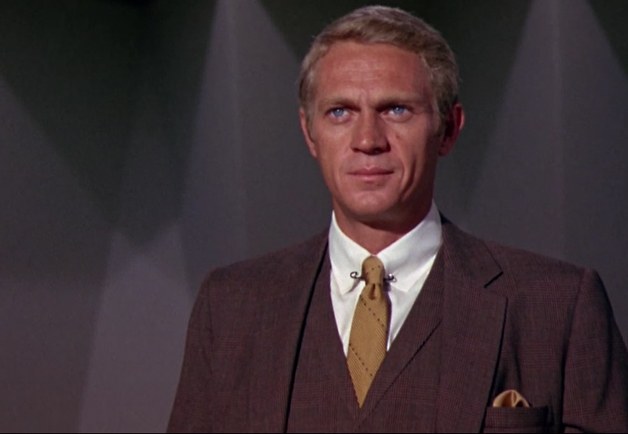
Steve McQueen – The Salvation of An American Icon

For six years I wrote a monthly movie review for the church newsletter. It was a pure labor of love. This was one of my favorites. 

Steve McQueen died 38 years ago so to many of you this story will have little significance, but to the Baby Boomers he was The Man, The King of Cool. He was the bad boy girls were irresistibly drawn to and simultaneously feared. Steely blue eyes and a killer smile said, “Come here and go away.”

Who can see a 1968 Ford Mustang GT without thinking of McQueen roaring through the streets of San Francisco in the movie Bullitt?

The Salvation of an American Icon is the inside story of Steve McQueen who seemed to have it all. Told by Pastor Greg Laurie, the real Steve was born to alcoholic parents, abandoned by his father as an infant, and knocked around by stepfathers.

Angry and neglected, he became a street kid at age 15. Petty crimes led to arrests and, ultimately, to reform school. He learned and taught a few tricks there before enlisting in the Marines where his misfit ways continued, but he managed to eek out an honorable discharge, anyway.

He finally stumbled into acting and found his purpose. Even there, he could not control his behavior, costing him jobs and allies. 

His breakout roll came in the TV series Tales of Wells Fargo. The camera loved him and he knew how to make the most of it with subtle use of crystalline eyes and a dangerous smile, employing little distractions with his hands, his signature ploy.

Other actors complained about Steve’s distractions: fiddling with shotgun shells or a rope, the baseball and glove in The Great Escape.

At age 29, he starred in The Magnificent Seven with Yul Brenner. He drove Brenner crazy with his fidgeting and stole the show.

The Bad Boy

He starred in a total of 28 movies, won an Oscar in 1967 for Sand Pebbles, and in 1968, received his star on the Hollywood Walk of Fame for the movie Bullitt. His life seemed charmed.

But, success and celebrity sent McQueen on another quest that would have made Solomon envious. He bought a castle, scores of fast cars and motorcycles, and had an insatiable appetite for women.

The King of Cool

He strove tirelessly to fill the hole left inside by his rough childhood and absentee parents. “Vanity of vanities! All is vanity.” Ecclesiastes 1:2

On the evening of August 9, 1969, Steve received a wake-up call. On his way for a night of partying at actress Sharon Tate’s house, he was distracted by a female hitchhiker. That hitchhiker inadvertently saved his life; Charles Manson and his gang broke into that party and gruesomely murdered all in attendance.

Along with career, financial and personal losses, Steve’s world was rocked and all seemed to be vanity, indeed. He withdrew from Hollywood, grew his hair and beard, and became a recluse. 

Where is God in all of this? As is His way, He has been working behind the scenes, behind the camera.

Throughout McQueen’s career he kept bumping into Christians, some who witnessed to him and some whose witness was their inexplicable peace and joy. He was curious and open but didn’t meet God head-on until flight instructor Sammy Mason, a father figure to him, introduced Christ as they soared over the beautiful coast of Southern California. 

Steve McQueen accepted Christ in the late 1970’s shortly before being diagnosed with Mesothelioma, lung cancer caused by asbestos. He died November 7, 1980; he was only 50 years old.

Shortly before passing away he asked to meet Billy Graham. Graham flew to a Mexican clinic and gave him his Bible. McQueen was clutching that Bible at his death.

For all of us of a certain age, Steve McQueen – The Salvation of an American Icon is a must see. It is brimming with wonderful close-ups and clips from all those movies we loved.

Widow Barbara McQueen contributes amazing candid photos and her own personal stories of their relationship. Mel Gibson offers understanding into the actor’s skill, patterning his own performances after The King of Cool.

It is inspiring to see a troubled, restless, contentious life saved and transformed by Christ. In the last recorded interview, two weeks before his death, McQueen regretted that he hadn’t been able to do more good for Christ, to tell others what the Lord can do for them.

In the final scene thousands packed into a stadium to preview the movie and Steve McQueen’s voice from that interview rang out his dying wish to them. I imagine those blue eyes and killer smile again from heaven; his prayer answered 37 years later. 

The movie was released September 2017, and is based on the book of the same name by Pastor Greg Laurie.

That Dog Won’t Hunt

Animal Control brings us sick and injured animals found along the road or rescued from back yards and abandoned cars.  Most have suffered neglect, many have been physically abused and for some, it is too late. 

Coco was a two year old female German Shorthair Pointer.  Animal Control rushed her into the clinic one morning after finding her on the side of a busy road.

German Shorthair Pointer
The classic German Shorthair Pointer

One of her front legs dangled by shreds of skin.  Beyond saving, Dr. Fritzgerald literally snipped off her leg with surgical scissors, leaving a ragged stump above the joint. 

The best guess was that she had been hit by a car. Surgery was performed immediately to remove the remains of her leg up to her shoulder.

After Coco’s surgery and recovery from anesthesia she was placed in a large dog run.  Her bandages encircled her chest, around her neck, over and under her remaining leg to keep her wound covered.  She wore a cone.

As soon as an animal is fully awake from surgery they are on their feet and an effort is made to take them outside, to eliminate on their own as soon as possible and get everything working again. Those first few attempts for a 3-legged dog are always difficult.

A sling was contrived using a towel under her front end to help Coco get to her feet.

It is a sad and pathetic process in the beginning.  Why is it always the bigger dogs that become tripods?  

No matter on which end the leg is lost, there are unique struggles.  A lost front leg shifts the balance and makes the dog tipsy.  A lost rear leg places the bulk of the weight on the remaining leg, making going to the bathroom, jumping and climbing stairs difficult.

And, no matter on which end the leg is lost, the remaining soldier is asked to carry on alone, at risk for a blown out joint or torn ACL.  Why the bigger dogs with so much more weight to lift and balance?

Coco’s body began to heal but her spirit did not.  I have never seen such a depressed dog after surgery.  She lay in her kennel, head down, and refused to eat.  Her sadness went beyond her leg.

The beauty of dogs is their amazing resilience, their ability to forgive and forget.  I have seen other amputees wag their tails before coming out of anesthesia when petted or spoken to.  I have seen them give it the old college try to struggle to their feet, as if to say “Oh, something’s changed, not sure what, but I’ve got this!”  Most quickly adapt and regain their cheerful outlook on life, trusting that it is still a good and kind world.

Everyone in the clinic worried about Coco’s failure to thrive.  One day when the chaos of the front desk had slowed briefly, I went upstairs to visit her.  She lay in her kennel shrouded in sadness, a full bowl of food untouched before her. Large, liquid chocolate eyes looked up at me, showing little emotion or acknowledgement.

I carefully opened the large metal gate and slipped in quietly, easing myself onto the floor beside her.

“What’s the matter girl? Does it hurt?  Do you miss your owner?  You have to eat to get better.”

I continued to speak softly to her, stroking her liver and cream spotted sides, her long, soft, floppy ears. She looked at me forlornly. I picked up the bowl and gathered a small clump of the canned food with my fingers. She delicately took the bite from my hand. We continued to chat and munch until she had eaten a considerable amount. Progress. Maybe she just doesn’t like to eat alone. I know.

Animal Control managed to track down Coco’s owner, a dock worker at the Port of Seattle, not far from the clinic.  He had taken her to work with him where she ran free amongst the ships, docks, giant cranes, and semi trucks that loaded and unloaded all day, every day. Unattended, she had wandered into traffic. 

The owner called late one gray afternoon when he learned that we had Coco. 

“I understand you have my dog.  They told me you cut off her leg without my permission.  Now they tell me I have to pay her medical bills if I want her back. You had no right to do that.”

“I’m sorry, sir.”  I replied.  “You’ll have to talk to Animal Control about this.  We are just here to care for her.”

Showing his true colors, with a bitter edge to his voice, he said, “What am I going to do with a three-legged dog?  I can’t take her to the docks anymore; it’s too dangerous for her now.  Besides that, I got her to hunt.  She can’t hunt anymore.  What am I supposed to do with a three-legged dog?”

I grit my teeth as hot, angry tears formed behind my eyes.  “I’m sorry, sir.  You’ll have to go through Animal Control on this.”

Not once did he ask how she was.  Not once did he show the least bit of concern or regret, no emotion at the tragedy that had befallen his dog, nor did he ask to see her.

Immediately after hanging up, I dialed Animal Control.  I relayed our conversation.

“You can’t let her go back to that man.  He’s mean and angry and he doesn’t care what has happened to her.”

The woman officer at AC had already had the same conversation with him and said they were not going to make it easy for him to reclaim her.  The tactic worked for, a few days later, he surrendered Coco to AC, making her the property of the City of Seattle.  He no longer owned a dog that can’t hunt.

Ever so slowly, Coco became proficient on her feet and ate, though still without enthusiasm.

Two weeks after her surgery, Animal Control decided she was well enough to be moved back to their facility to continue her recovery and, hopefully, be adopted out.  

I had become attached to this beautiful, sad girl.  Officer Blue came to pick her up mid-day and I helped him get her out to his truck and loaded into one of the kennels.

Behind the cab of the AC truck are rows of metal boxes, two deep, back to back, with metal vents for doors. Once the animal is inside, it is all metal walls, with only the slits in the vented door to see out…a sad and cold prison.

Coco’s kennel was several feet off the ground and it took both of us to lift her up, a painful process for her.  It broke my heart to see her taken away, still so raw and broken.

As we closed the door to her kennel impulse overtook me, this time tears of sadness flowed. “Wait, don’t go!  I’ll be right back!”  I rushed back into the clinic and quickly scribbled my name and phone number on a post-it note.  “Here, Officer Blue.  If no one wants her, please call me.”

I rarely become attached to our patients.  How could I stand it, otherwise?  The emotional overload would be too much.  As it is, we in the veterinary world suffer burnout and exhaustion from the drama of life and death that is part of the job.

But, there was something in Coco’s sad brown eyes.  I wanted to take her home to lie on my couch and live a life of ease.  I wanted to make her smile again, to lay on the deck in the sunshine, to wag her tail, and regain her joy of being alive.  I wanted her to follow me around the house and keep me company during the long, dark Seattle winters.  I wanted us to be a little family of two.

But, I also knew that three legs or not, she is a German Shorthair, which means high energy.  This breed is meant to run through open fields and find purpose in hunting.  She is born to strike that perfect, statuesque pose, arrow straight from the tip of her nose to the tip of her tail, breathing and time suspended, as she silently lets her hunting partner know there is a pheasant hiding ahead in the tall grasses.

The Hunter

Coco would be home alone and miserable.  Dogs need their packs and solitary confinement makes them crazy.  No matter how much I loved Coco, she would not be happy with our arrangement.  She needed a family, maybe some kids, and lots going on around her to keep her mind bright and her spirits up and I could not give that to her.

As Animal Control drove away with her, I wondered what I had done and if Coco was really meant to be with me. When they called me a few weeks later to offer her to me I was able to say no, that she would be better off with someone else.

Two months after her accident, one sunny spring day, I took a call from a young man.  He explained that he was looking for Coco’s medical records. He and his partner had adopted her the weekend before and she would have a new vet in Bellevue.

“Oh, I’m so happy to hear that!  How is she?” (happy tears now)

“She’s great!” he replied. “She’s laying right here beside me on the couch with her head on my lap.  She’s a great dog.  We already love her.  Oh, and we changed her name to Gracie.”

Perfect.

I promised to send him Gracie’s medical records and told him how thrilled I was that she had found a good home.  She would have two active, strong, devoted young men to walk her three legs off and fill the void left in a dog that won’t hunt.

Irreverent Churchlady

The story I’m about to tell you may or may not be true. And if it is true, I may have embellished. As they say in the movies, “Any similarity to actual people and events is purely coincidental.”

Life is funny and sometimes the absurdity of it seeps through the church doors, waltz’s down the aisle and takes a front row seat.

Joanie is a soprano in the choir. She has taken vocal lessons, honed her craft, and she takes her job seriously, performing with somber dignity, Sunday after Sunday. Occasionally, her position is elevated with a small solo bit. Her highest honor, and our blessing, is when she performs an entire number alone. 

One particular Sunday Joanie graced the congregation with a number during the collection of the offering. She had worn her best that day, a smooth, body-hugging sweater in dusty purple and a floral skirt of dusty purple cabbage roses against a creamy background. Her platinum hair was swept up into a high, severe bun, like an angelic halo. Within that dusty purple sweater proudly rested larger than life breasts, improperly supported for the occasion.

Approaching the piano on the main floor of the sanctuary, she struck a pose, with her posture erect, shoulders back, chin up and eyes lifted heavenward.

Directly in front of Joanie, were the objects of the special occasion, retiring missionary husband and wife, fresh off the boat from the Philippines. Their status honored them with the entire front pew, along with their grown children with spouses, and an aging mother-in-law.

As luck would have it, Missionary Hubby sat directly in front of the Prima Dona of Church Solos as she began to perform. I happened to be sitting in the pew behind the entourage, off to the side.

The piano began the introduction to the performance. On her cue, Joanie took a deep, cleansing breath and began to sing in her high, trilling voice.

As she filled her lungs with air, her breasts seem to swell, also. Have you ever noticed that opera singers always seem to have large bosoms? Do they hold extra reserves of oxygen, like floaties in the pool?

I don’t know if there was a draft, mysteriously drifting past Joanie, or if the thrill of the moment elevated her spirits, but as if taking their own cue, the girls pointedly stood at attention. The poorly constructed bra, ill- equipped for its assigned task, failed to lift and separate, to offer any noticeable assistance.

My eyes widened in abject horror and disbelief; I felt my own face flush.

With each note, each refilling breath, Joanie’s chest heaved and hoed in rapturous splendor. Her voice soared and her spirit leapt to the rafters, the twins in unison.

My eyes shot to the royal delegation ahead of me to register if I am the only one who noticed. Missionary Hubby was at once transfixed and stunned. A flush began to creep up from his shirt collar, casting his ears in a rosy hue, making its way to the top of his bald head where a glistening sheen was beginning to form. He can’t look, but he can’t look away. His Adam’s apple bobbed as he forced down a swallow. He squirmed in his seat, his eyes darting nervously. He looked in his lap, looked up to the ceiling and away into the choir loft. His brow was furrowed, worried, even panicked, as his breathing turned shallow and rapid.

O, God, make it stop. Please, make it stop

By this time, I am choking on strangled giggles, struggling to keep a straight face. My eyes watered and a hot flash raced through me from my head to my toes.

Joanie’s song seemed interminable; how many verses are there? I wanted to slip up front and discretely offer her my coat but there was nothing discrete to be done. All we could do is sit with folded hands and pray for the grace to get through this with as much dignity and decorum as humanly possible.

Poor Missionary Hubby will just have to arouse as much composure as his elderly heart can muster.

Finally, blessedly, the performance ended. We clapped furiously in relief, hoping to speed things along, get Joanie out of the limelight and the draft. 

Missionary Hubby mopped his brow and sagged weakly in his seat, and I am exhausted from my efforts. Were we the only ones privy to the spectacle?

When the service ended I rushed to ask my friend Hope who was sitting further back. “Did you see it? Could you see what I saw from where you were?”

Perhaps taller heads prevailed; perhaps God blinded their eyes. In any case, I am grateful on Joanie’s behalf that only we chosen few were entrusted with the view.

For myself, I can’t help but see the bawdy humor in the ordinary things of life, even if it happens to be in church. God forgive me, I am an irreverent churchlady.

~~~~

I decided at the last minute that there’s not much more damage I can do here, so I’m slipping this little story in under the radar to complete the train wreck.

Turtle Viagra

Lest you think the vet clinic is a vale of tears, inhabited by humorless souls…

Exotics are animals apart from the usual dogs, cats, rabbits, and guinea pigs.  Exotics include birds and reptiles and we don’t usually see them in the clinic.  Someone walked in off the street once with a monkey.  We promptly sent them on their way to the exotic animal clinic in the city. Maybe we should have sent them to the Woodland Park Zoo.

Jamie, one of our receptionists, has threatened to quit if a bird is even mentioned, so terrified she is of the feathered beasties. Ginny is a relief tech that helps us out from time to time. We love her enough to make sure there are no pet rats on the premises when she is coming in. Most of us hate reptiles and run the other way when one shows up.

Dr. Fraser used to work in our clinic and would occasionally see exotics. 

Buckie was a turtle Dr. Fraser treated that will forever stand out or up in my mind. Buckie had a most unusual problem…his package. Did you know a turtle tool is equal to the length of his entire body? Put into human perspective and this guy was one impressive hunk o’ burning love. However, this member of envy became Buckie’s downfall.

His owner brought him in because his landing gear got stuck in the down position.  He couldn’t retract it, resulting in it becoming dry and swollen, like some obscene geoduck.

We all crowded around in the back treatment room, leaning in, awestruck to behold the spectacle, as Dr. Fraser managed to lube up the braggart and coerce it back into decency.  Problem solved.

But, a few days later Buckie was back again with the same problem, this time even more pronounced.  A simple jock strap was not going to handle the junk in this trunk.

I am reminded of the Viagra commercials, “If you have an erection lasting more than four hours, seek immediate medical attention.” 

To save Buckie’s life, his manhood had to be surgically sacrificed. 

Buckie never returned to the clinic after his sexual reassignment.

Love Letter

August 15, 2019

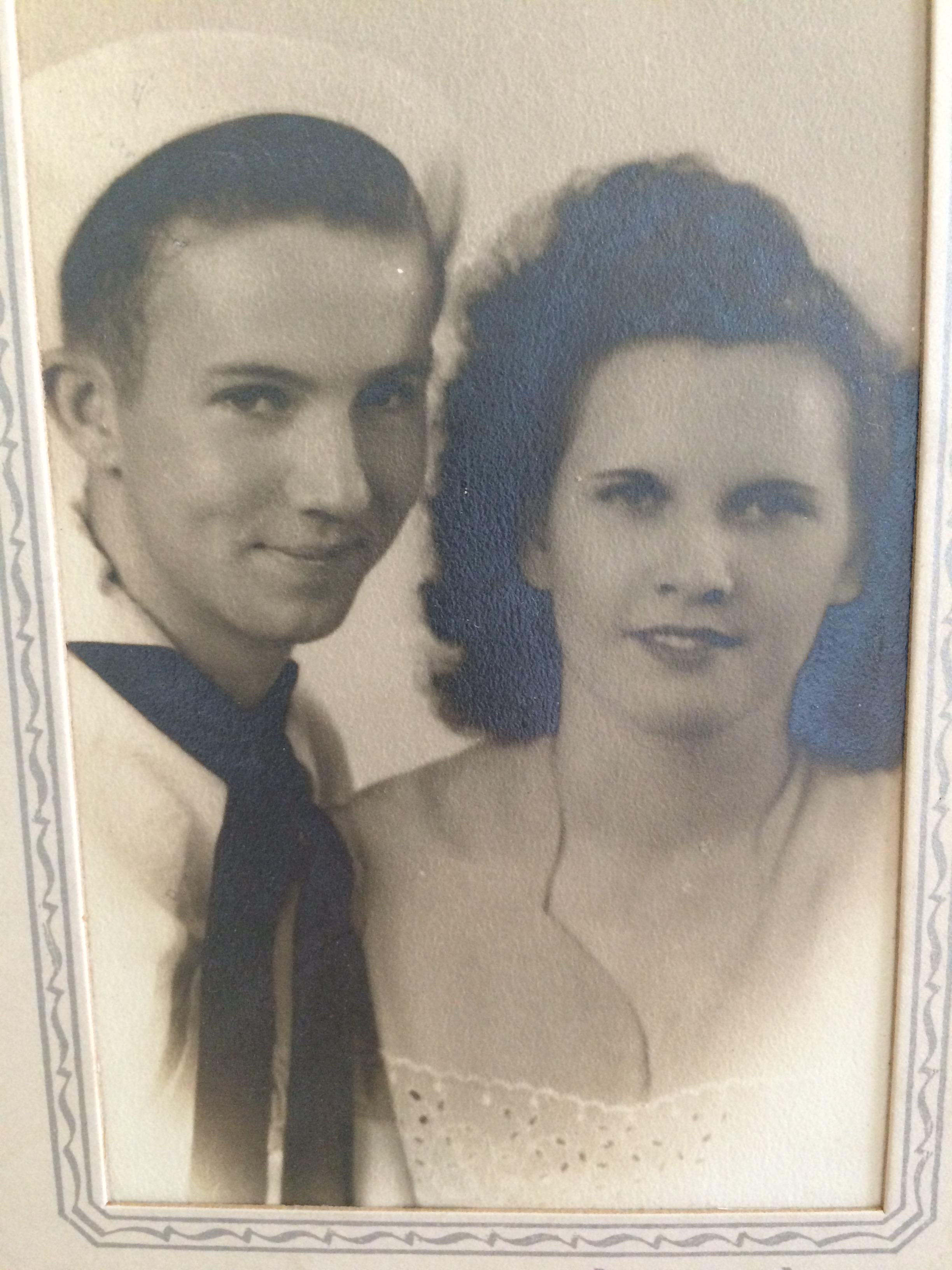
Seventy-six years ago, on August 13, 1943, my parents were married. Ina and Jimmie had been high school sweethearts but, with the war, he had joined the Navy. He turned 20 that April; she would not be 20 until October.

The US had been fully engaged in WWII for 21 months, since the attack on Pearl Harbor, December 7, 1941. The Invasion of Normandy began the month before and the Allies were feeling confident and determined to rout out the Germans from France. Gen. George Patton was taking credit for their bold move, and Franklin D. Roosevelt was in his 10thyear as President.

Jimmie came home on a week’s leave. Ina and he were married on Friday, they spent their wedding night in his parents’ home, and by Sunday, he was gone again.

They both passed away in 2016, within six months of each other, after 72 years of marriage. They were savers and left a treasure trove of letters, certificates, documents, and newspaper clippings, a time capsule from WWII. From these I have gleaned a wonderful glimpse of the people they were before they became parents, when they were young and in love, as they grappled with their world on fire, and how precious life was.

On their first wedding anniversary Jimmie wrote this letter to Ina from the USS New York. It was a Sunday.

~~~~

August 13, 1944

Written while I was on watch, as the ship was going through Mona Passage between Puerto Rico and Haiti.

My Darling Wife,

Just one year ago tonight we were married. I’ll remember it as long as I live. Those same little chills are running up and down my back now just as they did then. It may seem funny but sometimes funny things happen in this crazy world.

In several ways I am the luckiest guy in the world.

First, I am an American. I was born an American. No one can take that away from me.

Second, I am Christian. No one can take that privilege away from me.

Third, my Father and Mother. No finer people ever lived. No one can take them away from me, as they are mine forever.

Fourth, my wife, Ina. The nicest and finest girl I have ever met or ever could meet. You are mine and always have been mine. No one can take you away from me. I believe in you as I do the Bible. Nothing but truth, faith, and honesty. Truly, I love you with all my heart, with all my soul, with all my mind. From day to day you are all I live for. I’ll never forget how close I came to losing you. Never again will I be unkind, untrue, or disloyal.

(Two things held the meaning of this statement. Mom had a brief engagement to another young man but her mother hit the roof so she returned his ring. Also, in another letter, Dad revealed his indiscretion…he had asked another girl, a mutual friend of theirs from school, to write to him and send him her picture. Gasp…oh my.)

I don’t know how to end this for I guess I could write on and on, but Darling may there be for you and I a million more “13’s” in this world and the world to come.

“Yours”

Jimmie

Monday

August 8, 2019

It is 7am and still dark outside as I let myself into the clinic.  The lobby is dark but for the blue-green glow from the saltwater aquarium bubbling softly, while colorful tropical fish drift, oblivious to the world beyond their own. I take one final deep breath before turning on the lights.

Emily, the clinic cat, has been asleep in her basket on the countertop, but now she stretches, yawns widely and slithers out to greet me. The weekend has been too quiet for her and she is needy for her people.

Red lights on the phone blink furiously, demanding attention. Clients are in urgent need of appointments for sick animals and refills on prescriptions.  The fax machine is piled with lab results and ER reports for the patients that couldn’t wait until Monday.  The Outlook box has dozens of emails to be answered.  Ah, Monday….

I begin answering the blinking lights on the phone. Bentley, a 3 year-old Golden Retriever, began vomiting over the weekend, has become increasing weak and now cannot use his back end. The owner pleads for a speedy callback and earliest available appointment.

When I call her back she informs me she is already waiting in the parking lot.  As I open the front door for them, Dr. Fitzgerald happens to be on her way in, as well. She is our CEO and never comes in this early; I breathe a sigh of relief.

Bentley’s owners struggle to carry his 80-pound dead weight into exam room 1.  The strain of worry shows on the husband and wife as they ease him onto the floor.  He is in pain and as a seizure comes over him, he thrashes and cries out.  His owners hold him to comfort him and the wife begins to weep softly.

Dr. Fitzgerald comes in and begins to try to figure out what’s going on.  I leave the top half of the Dutch door open and can keep an eye on them, to anticipate if I am needed.

Ding-dong, ding-dong!

The front door lets me know our first surgery check-in for the day has arrived.  I put them in exam room 2 and call for a technician to admit them.  

Some come for dentals, to clean the good teeth, extract the bad ones.  Some are puppies and kittens coming for spay or neuter.  As the animals age, growths begin to appear that need to be removed. This is routine for the first hour each morning.

Meanwhile, Bentley continues to ride the waves of his illness.

The doctor and his owners sit on the floor companionably, quietly discussing and observing him.  When the next seizure hits they reach for him simultaneously and cradle him to keep him from hurting himself, from hitting his head on the cabinet or floor.

Dr. Fitzgerald decides Bentley should be hospitalized where he can be observed, sedated, and tests run to find out what’s happening.  His owners tearfully bid him good-bye and promise to come back soon.

Something is very wrong with this young, beautiful dog. The first guess is a toxin, some kind of poison.

Ding-dong, ding-dong!  Ring, ring, ring!

The phones have switched over and the calls begin coming through to the front desk.

My co-workers also begin arriving, sleepy and grumbling that the weekend is over, that they did too much, that the weekend was not long enough.

Ding-dong, ding-dong!  Ring, ring, ring!

By 9am the surgery patients have been checked in and we three receptionists are deep into messages, emails, and a constant flood of phone calls. There are more calls than we can handle and sometimes we must let it ring until the exasperated client leaves a message.

We’ve already run out of appointments for the day, so we plead with the staff, cajole, squeeze and manipulate the schedule to work in more.

Patients being arriving for regular appointments.  Dogs routinely pass around diarrhea, eat garbage and have bouts of vomiting.  The cats develop upper respiratory infections and abscesses from needle sharp teeth bites. Annual exams and vaccines, itchy skin, goopy eyes, and toenail trims are all just part of the day.

Ding-dong, ding-dong!  Click, click, click.

A woman, dressed in her business suit and heels, tapping away on her cell phone, hands me a foul-smelling zip lock bag containing a disgusting blob. “Here, test this and see what’s causing Buster’s diarrhea.”

Ring, ring!  Ring, ring!

Mid-morning I go upstairs where the surgery suite and doctors’ offices are located.  Bentley is in a large metal kennel in the midst of the morning’s busy activity. Despite Valium and fluids, he continues to decline.  Preliminary blood work doesn’t show anything out of the ordinary.

Cindy, a veterinary technician, kneels before his open kennel, stroking his golden fur, speaking soft words of comfort, but he doesn’t seem to notice, so focused he is on his distress. We all shake our heads with looks of concern. Is it a brain tumor?

I gather up paperwork, strike sheets and kennel cards to take back downstairs.

Ding-dong, ding-dong!  Ring, ring, ring!

Monday morning continues to roll on unabated.  Then Dr. Fitzgerald calls down to me.  Bentley is crashing, she has called his owners and they are on their way.  I’m to bring them up as soon as they arrive.

Soon the frantic owners rush in the front door.  We bolt up two flights of stairs and burst in to find Bentley on a surgery table.  Dr. Barrett, the surgery doctor for the day, is pumping frantically on his chest and an oxygen mask is strapped to his muzzle.  But, it is all meaningless now; Bentley has died suddenly and violently, leaving us all in a state of shock.

We stand there with our useless hands at our sides as the owners fall onto the body of their dear friend.  Dr. Fitzgerald suggests a necropsy to try to solve the mystery, but they can’t bear the violation of his body. Despite the outcome, I ‘m so grateful that she was here.

That is my cue to step in and take care of business, like some awful ambulance chaser, like some greedy mortician, I intrude on their grief, “What would you like to do with his body?”

We live in the middle of a city so practicality dictates against home burial of an 80-pound body in the back yard.  I offer cremation services.  “Would you like the ashes back? If so, would you like the cherry wood box or the grey metal urn?”

Who knows or cares at a time like this?  I quote prices and estimate how much time a private cremation will take. 

The rest of Bentley’s pack is two school-aged children. The parents plan to bring them in later in the afternoon to say good-bye.  We’ll deal with that when the time comes.

My work is done here and I slip away back downstairs, dry-eyed. I replace my mask of calm friendliness.  I smile and greet and shine good health to all.

Ding-dong, ding-dong!  Ring, ring, ring!

By noon I am five hours into Monday and famished.  I could eat in the staff lounge upstairs but I have to get away from the sights, sounds, and smells of the clinic.

In the surgery suite the dental drill whirs shrilly.  A post-op dog has developed stress diarrhea; another is waking up from anesthesia and, like a sloppy drunk, is baying mournfully. A cat that hates us all cowers in the rear of its kennel and hisses at each passerby.

I opt to eat alone in my car.  It is quiet as I eat and read and send my mind on a mental vacation. 

Ding-dong, ding-dong!  Ring, ring, ring!

It’s early afternoon and shifts change.  Some employees work half days so there is a changing of the guard.  This proves to be a good thing for those of us who work a full day; fresh troops to bolster sagging spirits and energy.

The afternoon grinds on with patient appointments for two doctors, arriving every 10 minutes.  We greet and treat each one as our very special friend.  The cranky, yowling cat, the old and graying dog, and occasionally, a happy, healthy furry friend!  Some come in just to be weighed and receive treats.  We’re making deposits in that animal’s bank of good cheer; it will come in handy someday later.

Bentley’s owners call to say they are on their way with the kids.  He is brought down to exam room 3 and laid out on blankets; his golden curls combed, his countenance peaceful, at last.

As they arrive, I whisk them through the lobby and into the room. Pandora was playing softly but we turn it up now.  A sign is placed on the door that says Quiet Please.  The receptionists nervously chat with the clients who continue to come in, all in an effort to conceal the sound of grieving children in room 3. 

Ding-dong, ding-dong!  Ring, ring, ring!

I answer the call of a breathless man.  A car has hit his dog and he’s coming right down.  I alert everyone in the clinic of the impending emergency.

Ten minutes later, Josh arrives with Heidi, a limp, soiled little white Shih Tzu.  Jamie, another receptionist, grabs Heidi and rushes her upstairs for urgent care.  

Josh is in tears as I try to gather information, to sort out the story.  He was mowing the lawn and unlocked the back gate where Heidi and their black lab were playing.  As he opened the gate, the lab forced his way out and Heidi followed.  She knew the neighbor across the street and, in her eagerness to greet her friend, bounded out into an oncoming car, in spite of the frantic commands by Josh and the neighbor to STOP!

Josh can’t bear the confines of the clinic and goes out to the parking lot to walk off the stress and adrenaline.

Heidi’s care has fallen on Dr. Barrett.  Too soon, she comes out to the lobby, then to the parking lot to speak to Josh.  He sinks down onto the curb as Dr. Barrett kneels beside him to break the news he already knew.

He needs some time with his little buddy.  I place them in room 5, the room with the couch.  He sits and holds her, stroking her little white curls, mindless of the dried blood on her mouth, nostrils and ears, and tells me about their daily rituals, how long she has been his special girl.

And I, in turn, must go through my gravedigger’s routine again. “What would you like to do with her body?” 

For over an hour, Josh sits and holds his girl for the last time. Eventually, he calls me back into the room to take her from his arms; he doesn’t want to leave her alone in this room, all alone.  

Ding-dong, ding-dong!  Ring, ring, ring!

It’s late afternoon now and people are getting off work. Professionals stop by in business attire, carpenters in paint clothes, nurses in scrubs, moms who have picked up the kids from school.

The day and the traffic have tried everyone’s last nerve and they come in with a no-nonsense attitude.  They need their pets’ medication and food and they need it now. We receptionists smile and try to look relaxed, in spite of our battle fatigue.

The noon to 8pm shift is now in the middle of their day, while mine is thankfully ending. 

Ding-dong, ding-dong!  Ring, ring, ring!

Monday continues with no sign of letting up.

I’m spent and walk out of the clinic.  Driving home, I am a zombie, numb, tired and hungry; I think about crying but don’t have the energy. A hug and a hot meal waiting for me at home would be so nice, but it is Monday.  The garbage goes out to the curb, the house is empty and it’s up to me to rustle up dinner.  Instead of a hug, I settle for a blanket over my lap and sit mute in front of the TV.

Ding-dong, ding-dong!  Ring, ring, ring!

I hear them still in the silence of my home.  Bone tired, I drag myself to bed and, lying there before turning out the light, I try to pray.

I want only to pray for myself, but then I remember Bentley’s pack and Josh.  

“Lord, bless them with peace and comfort in their time of grief. Lift them up and hold them close.”  

Tomorrow is Tuesday and it begins again.
The Silkie

July 18, 2019

Coal was a standard dachshund that was my not-so-secret admirer.  Weighing in at 40 pounds, he was sleek and black, like a seal from the Puget Sound, with long, velvety ears and black, liquid eyes that glittered with intelligence. Four feet long from the tip of his nose to the tip of his tail. His owner was a crusty old bachelor and the two made up a goofy kind of boys’ club.

Coal went to work with his owner to construction sites where he hunted down rats and was generally top dog.  His owner told me a story once about Coal’s hunting prowess. He took down a coyote that had become a nuisance in the neighborhood then dragged the critter home a block and a half.  The point of all this is Coal was tough, a real man’s dog.  That is, until he came into the clinic.  

I am a dachshund person. Mariana was my childhood companion and passed away after I left home. Shotzi was my soul mate. She was the smartest girl! In the early morning hours when I let her outside, she knew not to bark at the squirrel that ran along the fence, daring her to raise Cain. Later in the day it would have been no holds barred. To ease my grief when she died, I went for broke and adopted two litter mates. Duchess was the sweet lover of my soul, while her sister, Katie, was an enigma. I couldn’t decide whether Katie was one sandwich short of a picnic or smart enough not to fall for the sappier side of life. She remained cool and aloof. Toys were for puppies and her emotions remained in check at all times. But, I dearly loved all of my girls.

So, when Coal walked into the clinic I was overwhelmed by this giant size doxie love.  Living exclusively in a man’s world, Coal apparently felt the same way.  As I swooned over him and showered him with sweet talk, he promptly squatted and let loose a river all over the lobby floor. His owner turned six shades of red and sputtered that that had never happened before.

Dogs make all kinds of messes in the clinic all the time, usually from stress, sometimes to leave a calling card for the next guy, so I shrugged it off.   Until the next time and the next and the next.  Repeatedly, Coal’s owner assured me this was totally out of character for him. I began to use restraint when Coal came into the clinic, speaking quietly and not getting too close for us to exchange scents.  For the most part, that worked.

One evening, Coal’s owner rushed in without an appointment, huffing and puffing to carry his 40-pound buddy. Coal was shaking, had vomited and generally, was not well.  Shaking is usually a sign of pain; my boy was hurting somewhere.

Later, as the manly duo prepared to leave with pain meds and pending blood work, the owner set Coal on the front desk where I was sitting.  I had visions of him releasing a torrent of love all over my desk.  I spoke softly to him while stroking his sleek, muscular sides.  He controlled his ardor and stopped shaking. This impressed his owner, “Not since this all started has Coal stopped shaking.  You have a special way with him.”

There is an old Irish legend about silkies , seals who come ashore, become human, and fall in love; the male silkies having great powers of seduction. Perhaps, Coal is a silkie that chose to become a dachshund instead.

Persona Non Grata

July 11, 2019

Yesterday I dodged a bullet. I was called for jury duty and got a last-minute stay of execution the night before; I did my happy dance.

I have an aversion to jury duty since getting caught up in the process and hope never to experience that again. I’ve seen what the legal dogs do when they get a tasty bone. Try to take a bone from a dog and see what happens.

A friend told me that only 15% of those summoned actually show up; they just don’t report! My luck, they would come after me, so being given a legitimate open door suits me just fine.

~~~~

I’ve been told it is a civic “privilege” when called to jury duty but it felt like anything but. Reluctantly, I reported for jury duty after being assured, over the phone, that it would take three to five days, at the most. I envisioned being sequestered for months while my life went on without me.  Irrational perhaps, but still these thoughts made me uneasy and uncooperative. I told myself, It’ll be fine.

After the first uneventful day, I reported a second time and was presented with a questionnaire, giving a brief overview of a case.  My first clue to the gravity of my situation came when it is implied that the trial could last up to six weeks.  Filled with dread, I answered the questions and waited for the next step.

I became one of a jury pool of 120 people necessary to sift out twelve jurors and four alternates.  A handful of us answered the questionnaire in such a way that sent up a red flag for the legal eagles involved.  We small few will have to account for our answers, individually, and alone.  

When my turn comes I am ushered into the courtroom to sit alone in the jury box, confronted by two lawyers from the prosecution, two from the defense, the judge and her staff, and most unsettling of all, the defendant, himself.  

I made it clear from my answers that I was not a willing party.  “If you are called to serve on this jury, can you give it your best effort? Will you be able to be impartial and totally fair-minded?”  Trying to keep my voice from shaking, I speak the truth.  “I don’t know.”  

The Assistant DA’s voice raised a notch as he grew impatient with me,  “This is going to be a very big case.  Aren’t you at all interested in being a part of it?” The big case was going to include pictures of the badly decomposed bodies of two murdered women.

We glare at each other; he shakes his head in frustration and sends me home for the day.

On day three, I am called for a second reaconing, again before the entire tribunal.  One of the questions referred to reports on TV and in the newspapers.  Had I remembered hearing of the murders when they first arrested the defendant and what, exactly, did I remember?

I did remember something but struggled with recall and became undecided.  Did I remember everything correctly? Perhaps I am confusing this situation with another murder I had heard about.  At this point, I have nothing to loose by being totally honest.

My honesty didn’t buy my freedom; I report on day four for the Voir dire. 

Voir dire: a process of speaking the truth to determine competency to be a witness or juror.  

This part of the process required all those remaining from the jury pool, approximately 80 of us, to be in the courtroom together.  We filled the jury box as well as the entire section designated for the spectators.  

The lawyers take turns, one hour each, expounding on one element of the case, then questioning various potential jurors on their perspective.  Speaking in vague and general terms, I recognize the game of cat-and-mouse. It is up to us to decipher the lawyer’s intent, to read between the lines.

“You’ve all had problems with relatives before, haven’t you?  Ever had an argument?  Possibly in the heat of anger, said things you didn’t mean, made threats?”  

The defendant, Gary Wayne, a machinist from Snohomish County, despised the mother of the woman he lived with.  The feeling was mutual and she had threatened to go to court for custody of the couple’s children.  One night, in a drug-induced rage, Gary allegedly had gone to the woman’s apartment, they argued and he killed her. Two months go by before passengers from the Spirit of Seattle Dinner Train spot her body lying near the tracks.

“Anyone here have any problems with drugs or alcohol?  How do you feel about someone who does use drugs or alcohol?”  

The Assistant DA took his turn as I tried to sink lower in my chair, to dissolve from his field of vision. No such luck; he calls on me.  Oh, well, why change his opinion of me now?  

I explain, “Yes, I do have a problem with drugs and alcohol.  There are alcoholics on both sides of my family so I might be genetically predisposed to addiction.  I am a teetotaler.”  

If only he knew how much of a square peg I really am, raised a Southern Baptist, where dancing was once frowned upon and alcohol has no redeeming value.  I am a square peg in a round hole in this group.

These questions referred to the second accusation against Gary Wayne.  A few weeks after the murder of his partner’s mother, Gary and a female childhood friend went off for a weekend of camping.  They drank too much and, in a slip of the tongue, he admitted the deed.   

Days later, sobering recollection sends him a jolt.  She was, after all, his good friend but could she be trusted?  Apparently, not enough to save her life.  His friend’s body was found weeks later deep in the woods of the same campground where he’d made his  untimely confession.

Confession is supposed to be good for the soul, right? What will it do for mine?

The defense attorney began, “Our system is based on the belief that 99 guilty men should go free rather than one innocent man convicted.  How do you feel about that?”

As with much of America at that time, I am soured on our system of justice after such debacles as the OJ Simpson trial and the nanny who was freed after shaking an infant to death.  Where is the justice in that?  We have all heard of work-release programs in which the criminal is allowed small freedoms, enough freedom to go back and take revenge on the person who put him in prison.  Our justice system, it seems, bends over backward to protect the criminal with secondary consideration for the safety of the general public.

The ax falls on me again and I speak my piece.  What was that?  Did I just hear a pin drop?

Weary and worn, we are called to a recess and ushered down the hall to be locked in another room.  Great precautions are made to insure that the potential jurors do not see the accused man walking the halls in handcuffs; it wouldn’t look good for him, you know.  As we are moving along, one of the men in the group leans over my shoulder from behind and chuckling, whispers in my ear, “You don’t need to worry, they won’t want you!”  I feel backward and stupid.  Somewhere in the evolution of my life I have missed a link and failed to become an enlightened, liberal thinker. 

The sixth day into the process, we were confronted with the final subtle, but frightening, implication. “This is a very serious crime.  We may need to seek the maximum penalty. Can you accept this burden and carry out your duty, if required?”

There is no doubt about this one; the prosecution would be seeking the death penalty. 

Ouch! My square edges bang into that round hole again.  I am a conservative contradiction of terms: pro-life in abortion, pro-death penalty in crime.  It’s easy to talk of the death penalty until confronted with the possibility of enforcing it.  This is a chilling reality and, thankfully, I am not asked to air my position.

Finally, all parties exhausted, the voir dire ends.  Now began the actual selection of the jury.  We were given numbers as identification through this whole ordeal and mine is #58.  At last, I was called.  “#58, you are excused from duty.”  

There.  It has been declared.  I am unacceptable for this civic duty; persona non grata. The desirable juror is liberal and fair to a fault, with no biases, no moral high ground. It now comes to me, in glaring clarity, how far from the middle ground I stand.

Epilogue: A mistrial was declared on the opening day of the trial after the prosecution blundered, implying that the accused would not testify due to his guilt, violating his right not to testify.  The jury was excused and the whole exhausting process repeated.  After an eight-week trial, Gary Wayne was found guilty and sentenced to life in prison without parole.

Reluctant Sacrifice

July 4, 2019

I wrote this story years ago to remember my own son’s service in the Army, of what he went through, and of my own reluctance to give my most precious child to our country’s defense.

With dismal regularity our country flexes its muscles and grows restless to practice the Art of War, cautiously inching nearer to the flames, trying not to get burned.  And, with dismal regularity the political climate reaches flashpoint, sending America’s sons and daughters to smother the flames.  Each time we enter the fire unwelcome memories bring back the fear I once felt for my own son. 

He was half way through his senior year in high school when he announced he would join the Army after graduation, the last thing this child of the Vietnam era wanted for her child.  His route would not be an easy road, but the rugged, treacherous path of an Airborne Ranger.  This elite piece of the military machine stealthily conducts ambushes, raids and reconnaissance, most often in the black of night. 

It would be another year before he would be accepted into the fearsome training school as part of the 75thRanger Regiment. I wrestled in quiet insanity, imagining the hardships awaiting him, the unimaginable challenges of his body and soul.  For his part, youth is blessed with the inability to fathom the worst that can happen. 

At that time, Ranger training consisted of 4 phases: Darby, Desert, Mountain and Jungle; each phase lasting approximately 4 weeks, with a day of rest between.  In an effort to simulate the stress of actual combat, they receive one hour of rest and one meal a day.  The MRE’s, meals-ready-to-eat, are designed to give energy and sustain the soldier’s life, but not necessarily to maintain his health.  The conditions of depravation wreak havoc on his mind as well as his body. As the soldiers begin to weaken physically and emotionally they are pushed to their limits to “Run, feel no pain, run, food and sleep are crutches!  Rangers lead the way!”  The objective of their commanding officers is to break down the spirit then build it up again.  “Can you take it?  Go ahead, quit!  Do us all a favor and fail!”  Their plan weeds out those with normal tolerance for pain and suffering quickly, while the survivors rush on into the next phase.

Darby, meant to sharpen and hone skills, contains equal amounts of abusive hazing.  Hunger and fatigue gnaw at their insides.  “Can you think of anything but food and rest?   Can you take it?  Go ahead, quit!  Do us all a favor and fail!”

After a day’s rest they head for Texas and the Desert Phase. There the heat saps their strength and confuses an already fuzzy brain.  Many suffer dehydration and heat stroke; a condition one never fully recovers from.  Once overtaken by the heat, these men become vulnerable and from then on, a weak link in the group.  Hot dusty winds suffocate them by day, replaced by frigid cold as the sun goes down. Visions of food crowd out the more important issues at hand; watch for snakes, scorpions, the enemy.  A hamburger rolls by in a gust of dusty heat, but no, it is only a tumbleweed. I awaken at odd hours in the middle of the night, heart pounding and, staring into the darkness, wonder, Is he in pain, is he afraid, is he lonely, is he all right?  Only silence answers my fears.

Month three begins with the Mountain Phase in the rocky terrain of Georgia where they are on the move 23 hours a day.  Their packs weigh 75 pounds, filled with gear and extra socks. A soldier’s feet are his most vital body part and must be preserved at all cost. No need for a sleeping bag; there will be no sleeping.  No need for extra warm clothing; warmth invites sleep. Son is one of the bigger guys so he carries an additional 25 pounds as the beast of burden for a machine gun and ammo assigned to him. 

His journey is torturous, hiking up rocky hillsides, tumbling down the other side through blinding brush. Only the stars overhead offer weak light in the dense forest that surrounds them.  Don’t light a fire, the enemy will see you!  Put your MRE inside your one layer of clothing, next to your body; that’s called a warm meal.  Shiver until your bones ache and stiffness sets in; stop chattering teeth!   Hoard salt and sugar packets to indulge in one flavorful bite.  At home I worry, I pray, I hate the unknown. 

While the physical rigors go on and on, the soldiers are assigned missions.  Can you think clearly, make a sound judgement, look out for your men and the enemy, as well?  Each man takes his turn in control of a group of nine.  The success or failure of the mission falls squarely upon the leader: set up perimeters, assign watches, form a plan of assault, execute the mission and pray that each man stays awake to do his part. Unfortunately, on Son’s mission, a man is found asleep; the mission fails, so the group fails.  These nine men must repeat the entire Mountain Phase and endure an extra grueling month.

While on the break between phases, care packages from home deliver rich and fattening foods to satisfy the cravings and letters to quench thirsty souls. The men plead for cookies, candy, home-baked anything and especially, anything with peanut butter.  I send huge amounts knowing I am feeding more than one starving young man.  And I send this psalm (121) to my son on the back of a recipe card:

           “I will lift up mine eyes to the mountains; from whence shall my help come? My help comes from the Lord…He will not allow your foot to slip; He who keep You…will neither slumber nor sleep.  The Lord is your shade on your right hand. The sun will not smite you by day nor the moon by night…He will keep your Soul…From this time forth and forever.

He carried this card with him out into the Georgian mountains to try again and read it when his spirit longed to give in and give up.

The final phase takes place in the swamps of Florida. There conditions simulate combat in the jungle.  Chest deep in frigid water for hours without end, their energy quickly drains away. Bugs drive them crazy.  But the light lies somewhere ahead in the mist; the end is near, maybe there is life after a walking death.  Three weeks later, when the next class came through, four young Rangers died of hypothermia in those icy Florida waters.

Nearly five months after it began, Son’s ordeal ended.  Of the 425 who started, only 102 finish, he is the youngest.  His slender 6’3” frame dropped 50 pounds and malnutrition caused infection in his knees. I try not to let this mother’s mind run wild with worry.

Three years later Son received his discharge while the government held claim to him for five more years, should we jump into war’s flames feet first.  

I have not been to war but I have felt its heat, a heat that sears and scars forever.  Its flames will flare up again and our country will beat its chest and draw lines in the sand to prepare, once again, to practice the Art of War. Other mothers will lay awake in the middle of the night while their sons and daughters put their lives upon that line.  I try not to become complacent about those who are sent to our defense and remember they are someone’s son or daughter, someone’s husband or wife, someone’s father or mother.  And, I secretly worry and selfishly pray, not my son.

Post Script: From now on, Son’s frostbitten hands will cause him pain whenever the temperature drops and his feet will never be the same. He recently had 3 vertebra in his neck fused together…residual damage from carrying so much weight on his back and hard parachute landings. But, thank God, he is alive.

Old Hippies

Today I take the artistic license of blogging to insert a bit of humor. I worked in veterinary clinics for years and came away with a wry outlook on human nature. The animals are predictable and true to form…humans, not so much.

Old Hippies

Dogs and cats come in a variety of breeds.  With dogs it is easier to differentiate a Lab from a Pitbull, from a Chihuahua, from a Poodle.  While cats are usually just Domestic: domestic long hair, domestic medium, and domestic short hair.  Occasionally, we see a Bengal, Norwegian Forest, or Main Coon.

I have observed that our clients also fall into a variety of breeds.  These breeds are not always the most obvious.

There is a particular breed of client I call Old Hippies, who may or may not be cross-bred with Vietnam Vet.  These guys all have one thing in common: pot.  They love it.  They waft into the clinic in a dreamy cloud of the stuff with a mellow, perpetually cheerful, go-with-the-flow attitude.  I know I can relax around this breed.  They have no sharp teeth or claws left; their points have been rounded off by a whole lot of living.  Like the grizzled old dogs that they are, they plod along with just enough energy to wag their tails.  Around them I can take my professional posture down a notch and rest a bit. These guys don’t stress about the traffic, they don’t care who runs for President, its all good, happiness is just one smoke away.

Jim is a tall guy with long gray hair that is always pulled back into a pony tail at the nape of his neck, a beard and mustache that curls up on the ends, giving him a permanent smile.  He has a cat named Brick, named after the Commodore’s song “Brick House.”  Never mind that Brick is a male.  You know the song:

She’s a brick house

She’s mighty mighty just lettin’ it all hang out

She’s a brick house

The lady’s stacked and that’s a fact

Ain’t holding nothing back

Every time he comes into the clinic we both say “Brick” at the same time and giggle.  It is our little inside joke.

Once, Brick became ill with an undiagnosed malady.  He spent some time at the ER and a few days in our clinic on supportive care.  Jim was beside himself; Brick is his sole companion.  I ran into Jim in the parking lot during this worrisome time.  He began to tell me about his sister, struggling with breast cancer, the recent passing of his mother, and now Brick’s illness.  He wept openly, then directly asked for a hug.  We shared an awkward moment as my eyes darted around the parking lot, hoping no one was watching, hoping he wasn’t reading anything more into that hug.

Thankfully, Brick recovered and we have resumed our old relationship.

“Brick is here to get his nails trimmed.”  Jim’s eyes twinkle and we share our inside joke again.

Carl stood before me at the check-out counter one evening.  He is about my height, with wiry, gray scarecrow hair that sticks out from beneath his baseball cap, and a dusting of gray whiskers sprinkled across his heavily lined face.  He waits quietly for his pet’s medication.  Pandora is playing Golden Oldies and begins to croon,

One toke over the line, Sweet Jesus, one toke over the line.

At this, he rallies and notices I am there.  He gives me a wolfish grin, showing yellow teeth from smoking too much whatever, and remembers his favorite joke.

“Do you know what the two most popular words were in the 60’s?”

I cut my eyes sideways and suppress a grin, “No….”

Still grinning, he says, “Wow and ear.”

“Ear?”  A giggle is percolating deep inside me.

With pinched fingers and puckered lips, he takes a long, wheezing drag on an imaginary joint.  He hands me the toke, squinting in the imaginary smoke, and squeaks out, “…’ere.”

We both burst out laughing.

I have never tried pot, I am marijuana virgin, but in that moment, Carl and I are compadres, having a few laughs, sharing an imaginary joint, having an imaginary pot party.

Glen is a giant of a man, standing at least 6’5”.  Like a Viking specter, his gray hair falls to his shoulders and down his back.  He wears an old, cracked leather jacket and is decked out with heavy silver chains around his neck and wrists.  Every finger has a chunky silver ring, one is a skull with blackened eyes.  When he smiles there are those long, yellow fangs again.  He must really love that stuff.  As he towers over me, I look up at him with a deer-in-the-headlights look of fear and awe, dumbstruck.  But, then he opens his mouth.  Turning to the woman client next to him, he says, “What a pretty little kitty you have!” And to another, “Such a precious puppy!” As he heads for the door, in a crackle of old leather and jangling jewelry, he tosses back a curtain of hair and throws me a girlish wave, exclaiming, “Have a lovely day, ladies!”

Pot is legal in Washington State now and I want to recommend it to some of our more uptight clients.  It would do wonders for their dispositions and make my job a whole lot more fun.